The Problem.
Most fraud detection projects stop at a Kaggle notebook. The real challenge isn't the model — it's turning raw, massively imbalanced data (0.17% fraud rate) into something usable by non-technical teams. A naive classifier predicting "Normal" on everything scores 99.83% accuracy and detects zero fraud.
The Solution.
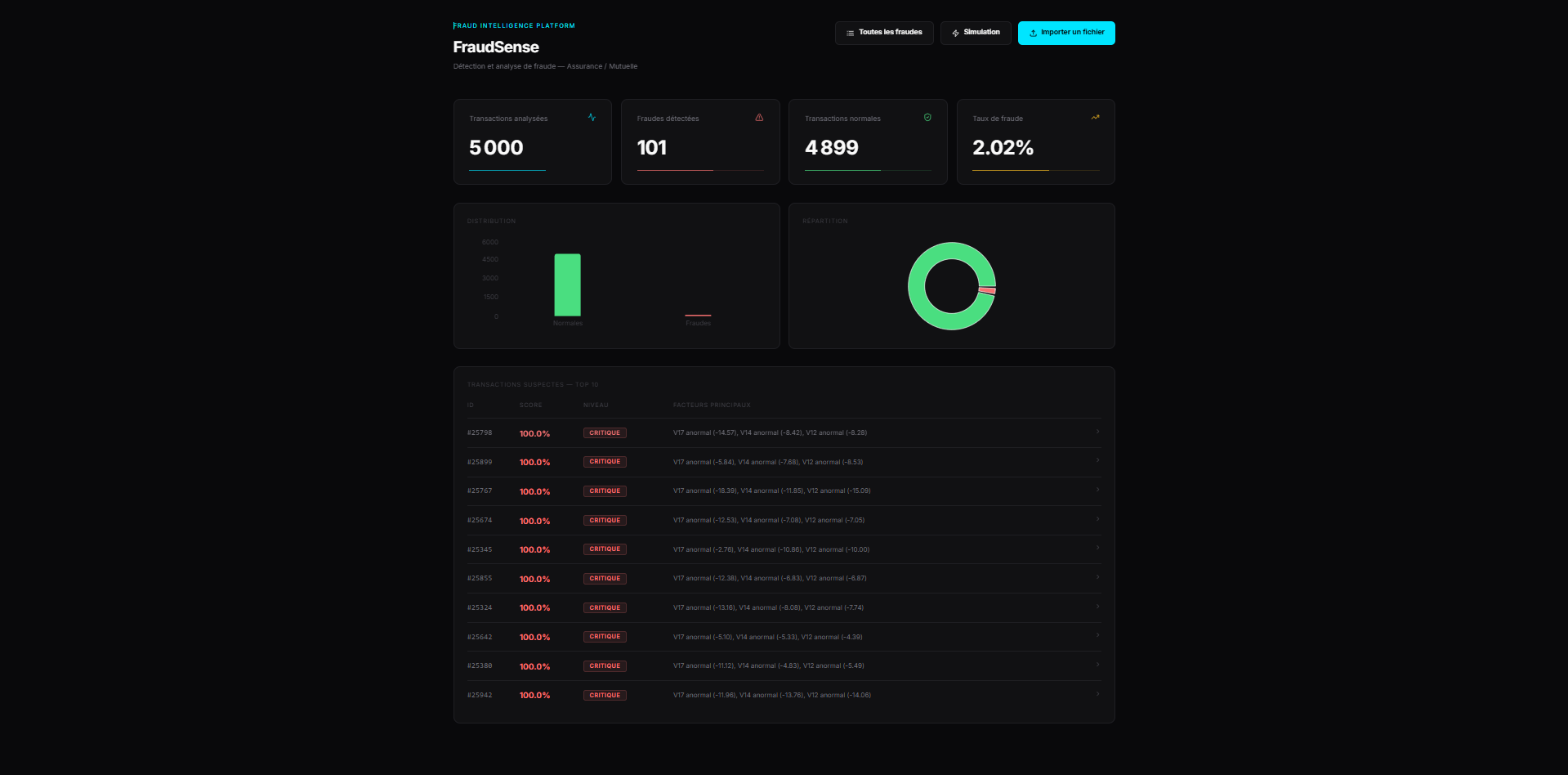
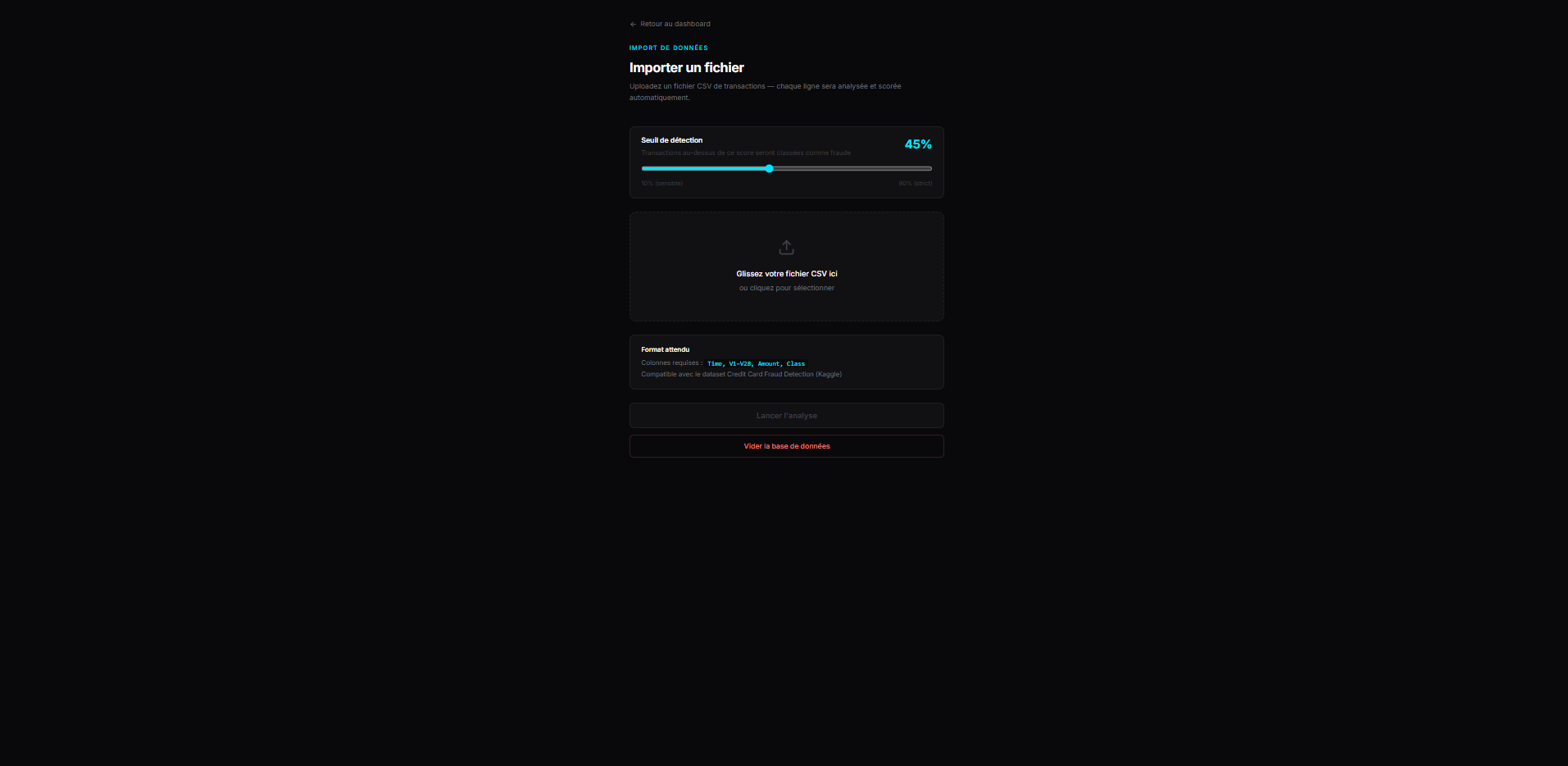
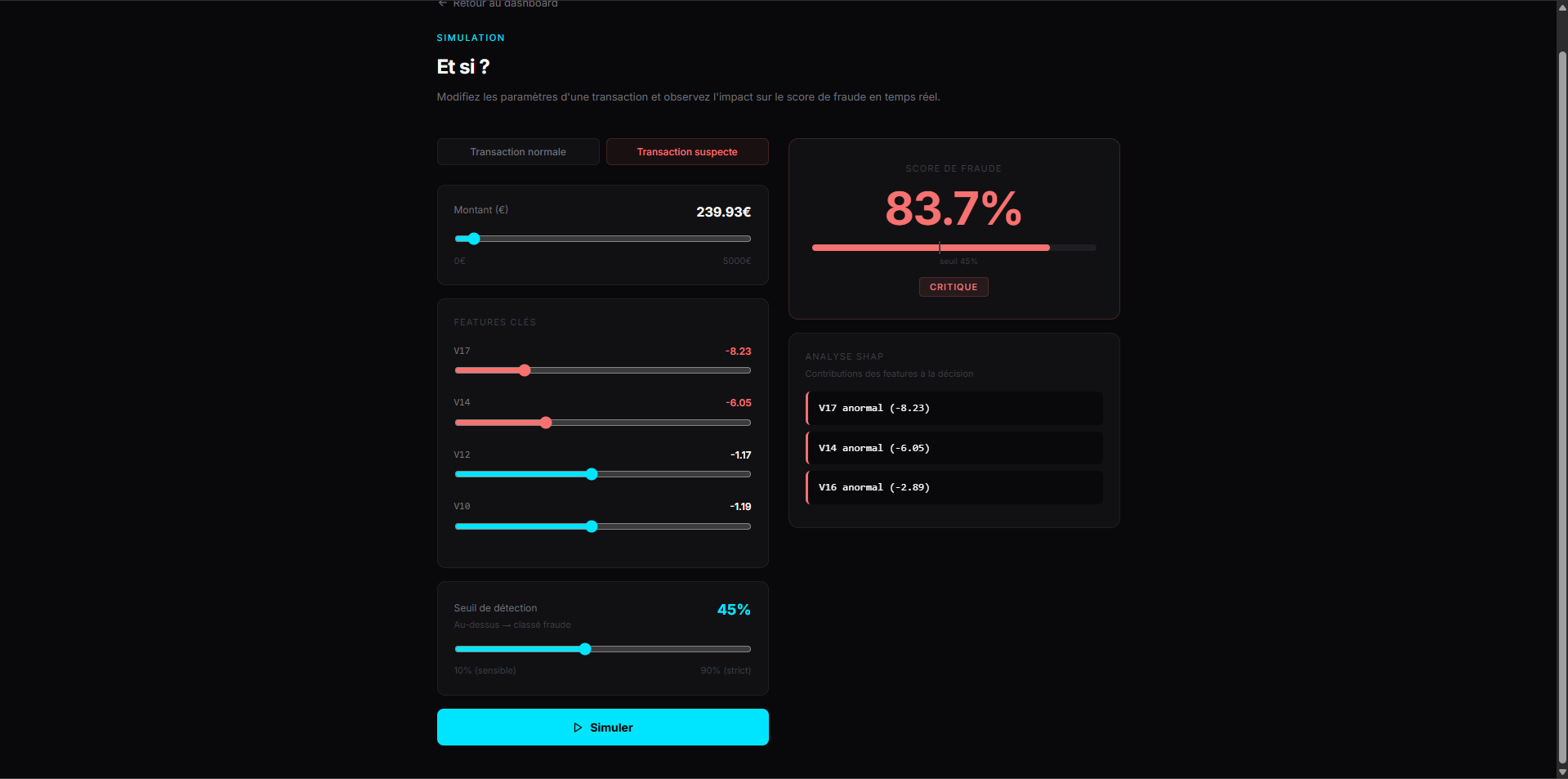
A full-stack SaaS platform with a production-grade FastAPI backend, a Next.js 14 dashboard, and a PostgreSQL database. Random Forest trained on 284K transactions with SMOTE rebalancing, selected for best recall over XGBoost. The right metric — recall over accuracy — was chosen from the start, because missing a real fraud costs more than a false positive. Each prediction is explainable — users can visualize risk factors per transaction in real time.